


Introduction
Foot pain affects millions of people every year. Whether you stand for long hours, play sports, or have a structural foot problem, pain can slow you down. Custom made orthotics offer a targeted solution that over-the-counter insoles simply cannot match.
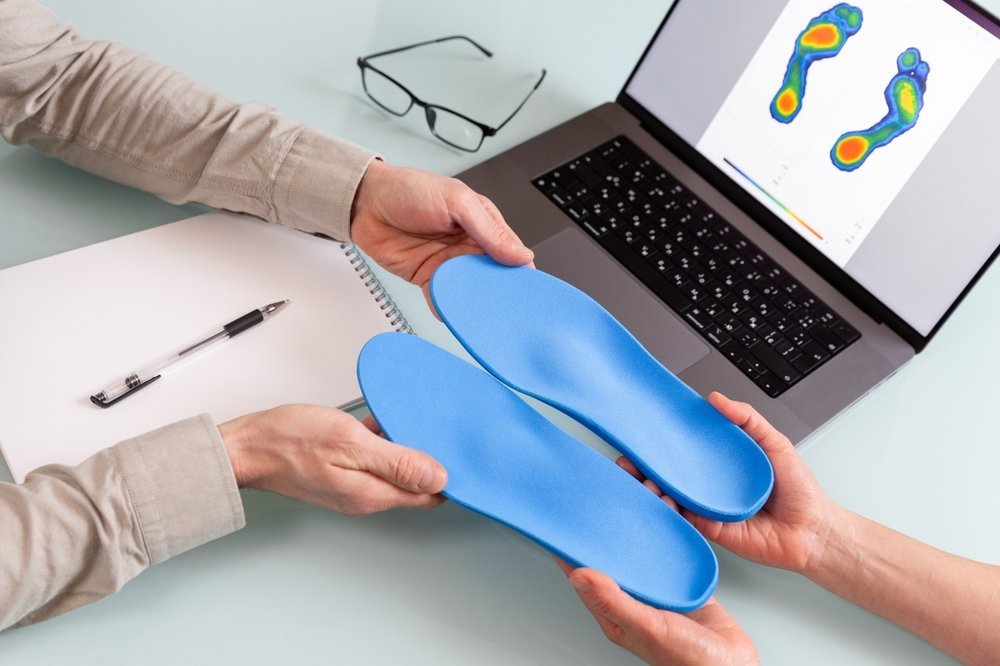
Unlike generic insoles you find at a pharmacy, custom orthotics are designed around your unique foot shape. They correct your movement, reduce strain, and support your body from the ground up. In this guide, we cover what custom orthotics are, how they work, who needs them, and what results you can expect.
Keypoints
- Clear explanation of custom made orthotics and how they work
- Simple breakdown of functional vs accommodative orthotics
- Who needs custom orthotics and why they are prescribed
- Common conditions treated including plantar fasciitis, flat feet, and joint pain
- Step-by-step overview of the orthotics fitting and manufacturing process
- Key benefits like pain relief, improved posture, and better mobility
- Cost comparison with over-the-counter insoles and long-term value
- Practical guidance for usage, recovery, and getting the best results
What Are Custom Made Orthotics
Custom made orthotics are medical devices worn inside your shoes. A trained podiatrist or orthotist designs them specifically for your feet. They differ from standard shoe inserts because they address your exact foot mechanics.
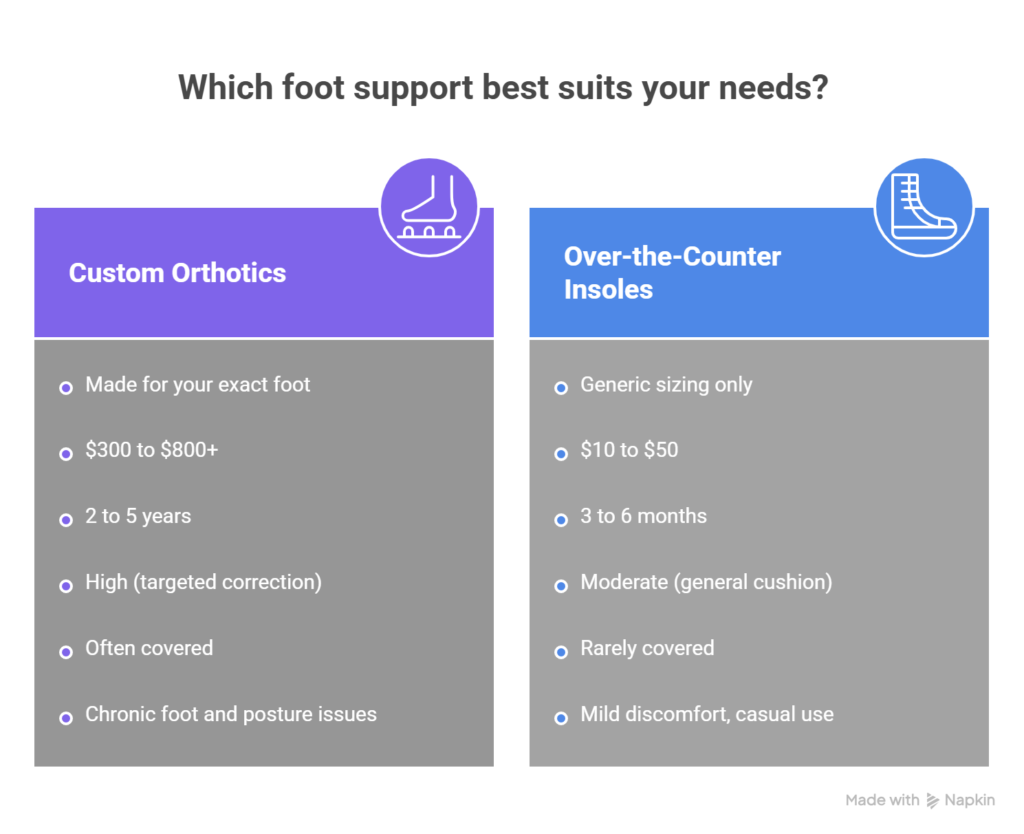
There are two main types. Functional orthotics control abnormal motion. They are often rigid and made from materials like polypropylene. Accommodative orthotics provide cushioning and support. They use softer materials like foam or silicone to relieve pressure on sensitive areas.
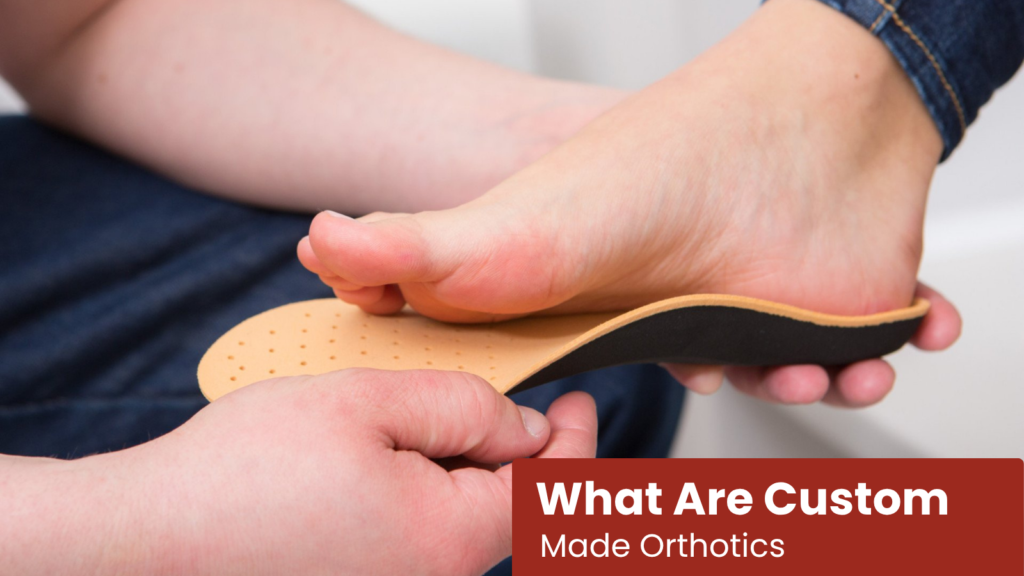
According to the American Podiatric Medical Association, around 77 percent of Americans experience foot pain at some point. Custom orthotics are one of the most effective non-surgical treatments available for many common foot conditions.
Common Conditions Treated with Custom Orthotics
- Plantar fasciitis and heel pain
- Flat feet and fallen arches
- High arches and supination
- Bunions and toe misalignment
- Knee, hip, and lower back pain linked to poor foot mechanics
- Diabetic foot complications
- Sports-related overuse injuries
Key Benefits of Custom Made Orthotics
Custom orthotics offer measurable advantages over generic solutions. They are built after a full clinical assessment, which means every correction targets your actual problem.
Precise Pain Relief
The biggest benefit is targeted pain reduction. A 2021 study published in the Journal of Foot and Ankle Research found that patients using custom orthotics reported a 54 percent reduction in chronic foot pain after 12 weeks. Generic insoles, by contrast, offer mild cushioning without correcting the root cause.
Improved Posture and Alignment
Your feet are the foundation of your body. When they do not move correctly, it affects your knees, hips, and spine. Custom orthotics guide your feet into the right position with each step. Over time, this reduces strain on your joints and improves your overall posture.
Enhanced Athletic Performance
Many professional athletes use custom orthotics to optimize their stride, reduce fatigue, and prevent injury. Research from the British Journal of Sports Medicine suggests that custom orthotics can reduce running-related injuries by up to 28 percent.
Long-Term Cost Savings
Custom orthotics typically cost between 300 and 800 dollars. While that seems high upfront, they last two to five years with proper care. Generic insoles wear out in three to six months and must be replaced repeatedly. Over five years, custom orthotics often cost less in total.
Support During Recovery
If you are recovering from a foot or ankle injury, custom orthotics reduce the load on damaged tissue. They allow your body to heal faster by distributing pressure more evenly. Podiatrists frequently prescribe them as part of a post-surgery or post-injury rehab plan.
The Custom Orthotics Fitting Process
Getting custom orthotics is a straightforward process. It starts with a consultation and ends with a device made specifically for your feet. Here is what to expect at each step.
Step 1 – Initial Assessment
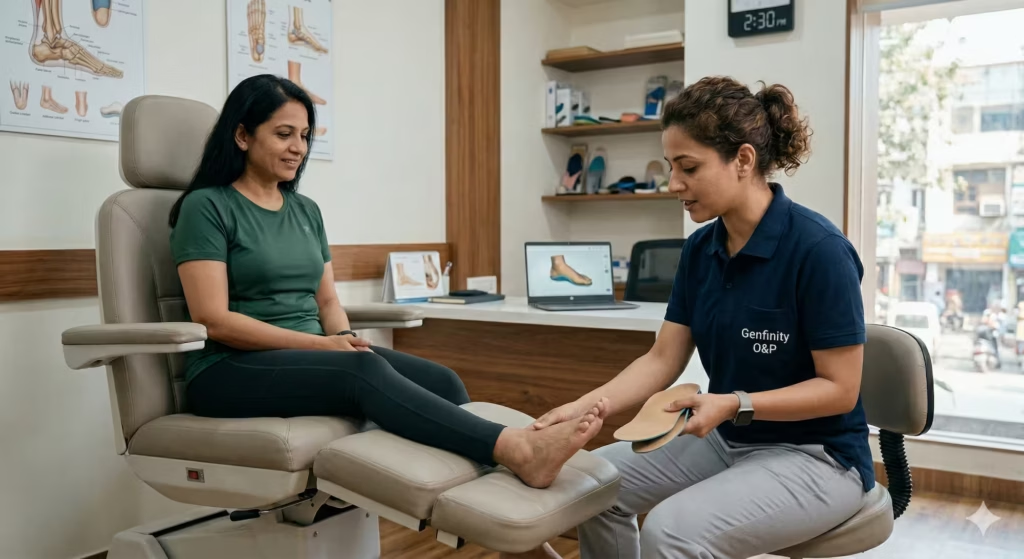
Your podiatrist begins with a full assessment. This includes reviewing your medical history, looking at your shoes for wear patterns, and watching how you walk. This is called a gait analysis. It reveals how your feet and legs move during normal activity.
Step 2 – Foot Scanning or Casting
Next, your practitioner captures the shape of your feet. Modern clinics use 3D digital scanning for high accuracy. Some still use plaster casting or foam impressions. Each method gives a precise model of your foot anatomy.
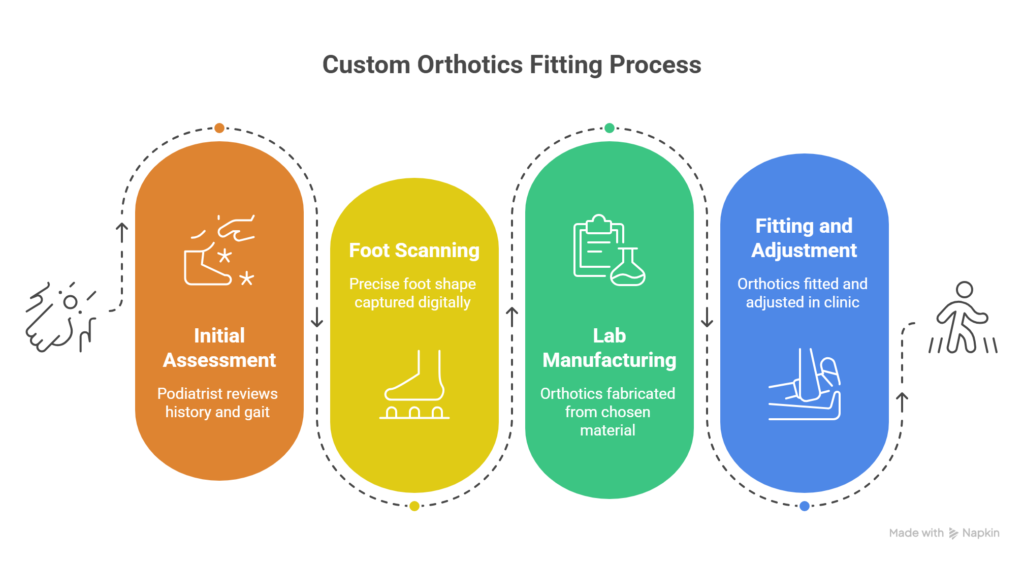
Step 3 – Lab Manufacturing
Your foot data is sent to a lab. Technicians use it to fabricate the orthotic from your chosen material. This process takes one to three weeks depending on the lab and the complexity of your prescription.
Step 4 – Fitting and Adjustment
Once your orthotics arrive, your podiatrist fits them to your shoes. You will walk with them to test comfort and function. Minor adjustments are common at this stage and are done right in the clinic.
Step 5 – Follow-Up Visits
Most practitioners schedule a follow-up two to four weeks after fitting. This ensures the orthotics are working as planned. Further adjustments may be made based on how your body responds.
Practical Tips for Getting the Best Results
Custom orthotics work best when you use them correctly from the start. Many people miss out on full benefits because of small mistakes in the early weeks.
Break Them In Gradually
Start by wearing your orthotics for one to two hours a day. Increase by one to two hours each day over the first two weeks. Your muscles and tendons need time to adapt to the new support and alignment.
- Week 1 – wear for one to two hours daily
- Week 2 – increase to four to six hours daily
- Week 3 and beyond – wear full time as needed
Pair Orthotics with the Right Footwear
Not every shoe works with orthotics. You need shoes with a removable insole and a deep toe box. Athletic shoes and walking shoes usually work well. Avoid shoes with built-in arch support, as they may conflict with your orthotic.
Keep Up with Physiotherapy
Orthotics correct your foot position, but they work best alongside stretching and strengthening exercises. Your physiotherapist can guide you through a routine that targets tight calves, weak glutes, and poor hip alignment. This speeds up recovery significantly.
Monitor Wear and Tear
Check your orthotics every six months for signs of wear. If the material has compressed or cracked, they may no longer be providing the support you need. Most custom orthotics last two to five years, but active users may need replacement sooner.
Stay Consistent
Wear your orthotics every day, not just when you feel pain. Consistency is key. Removing them for long stretches lets your feet revert to poor mechanics, which slows progress and can bring back symptoms.
What Results Can You Expect
Results vary based on the condition being treated, but most patients notice improvement within four to eight weeks. Here is a realistic timeline of what to expect.
- Weeks 1 to 2 – mild discomfort as your body adjusts
- Weeks 3 to 4 – noticeable reduction in foot and heel pain
- Weeks 6 to 8 – improved posture and reduced joint strain
- Months 3 to 6 – long-term correction and sustained pain relief
A clinical review from the Canadian Podiatric Medical Association found that 80 percent of patients with plantar fasciitis experienced significant pain relief after three months of consistent orthotic use. For athletes, performance gains were often visible within four to six weeks.
It is important to remember that orthotics are a support tool. They work best as part of a broader care plan that may include physiotherapy, proper footwear, and lifestyle changes. If you have not seen improvement after three months, follow up with your podiatrist for reassessment.
Are Custom Orthotics Covered by Insurance
In many countries, custom orthotics are partially or fully covered by health insurance when prescribed by a licensed practitioner. In Canada and the United Kingdom, coverage depends on your plan and the diagnosis. In the United States, Medicare and many private insurers cover them for specific medical conditions.
Always ask your provider for a written prescription and a letter of medical necessity. Keep all receipts and documentation. This improves your chances of approval and reimbursement. Some flexible spending accounts and health savings accounts also cover orthotics.
Learn More About Foot Health and Recovery
Custom orthotics are just one part of a complete foot care strategy. To get the most out of your treatment, explore these related topics.
- Read next: Prosthetics vs Orthotics: Key Differences Explained
- Also useful: Why Custom Orthotics Are Worth the Investment
These guides go deeper into specific conditions and give you practical recovery plans to use alongside your orthotics.
Conclusion
Custom made orthotics are one of the most effective tools for treating foot pain, improving alignment, and supporting long-term recovery. They are not a quick fix, but with consistent use and the right care plan, they deliver real and lasting results.
If you deal with chronic foot pain, poor posture, or a recurring injury, it is worth speaking with a qualified podiatrist. A proper assessment and a well-fitted orthotic could be the turning point in your recovery.