
Introduction
Losing a leg or part of a leg changes your life. But it does not have to stop you from walking. Modern lower limb prosthetics help millions of people move again every day. Whether you lost a limb due to injury, disease, or surgery, there is a prosthetic solution for you.
This guide covers everything you need to know. We look at the types of lower limb prosthetics, how they work, and how to recover your walking ability step by step. You will also find practical tips that can speed up your progress.
Expert Insight: According to the Amputee Coalition, there are about 2.1 million people living with limb loss in the United States alone. Nearly 54% of those amputations involve the lower limb.
What Are Lower Limb Prosthetics?
Lower limb prosthetics are artificial devices that replace a missing leg or foot. They are designed to help you stand, walk, climb stairs, and sometimes even run. The goal is to restore as much natural movement as possible.
Each prosthetic is custom-made to fit the user’s body, lifestyle, and activity level. A good prosthetic does more than replace a limb. It helps you feel stable, move safely, and live with more freedom.
Who Needs a Lower Limb Prosthetic?
You may need a prosthetic leg if you have had an amputation due to any of the following reasons:
- Diabetes leading to severe complications in the foot or leg
- Trauma from accidents or military injuries
- Peripheral vascular disease affecting blood flow
- Cancer that requires surgical removal of a limb
- Congenital conditions where a limb did not form fully at birth
A prosthetist (a specialist in building and fitting prosthetics) works with you to choose the right device based on your health, goals, and budget.
Types of Lower Limb Prosthetics for Walking
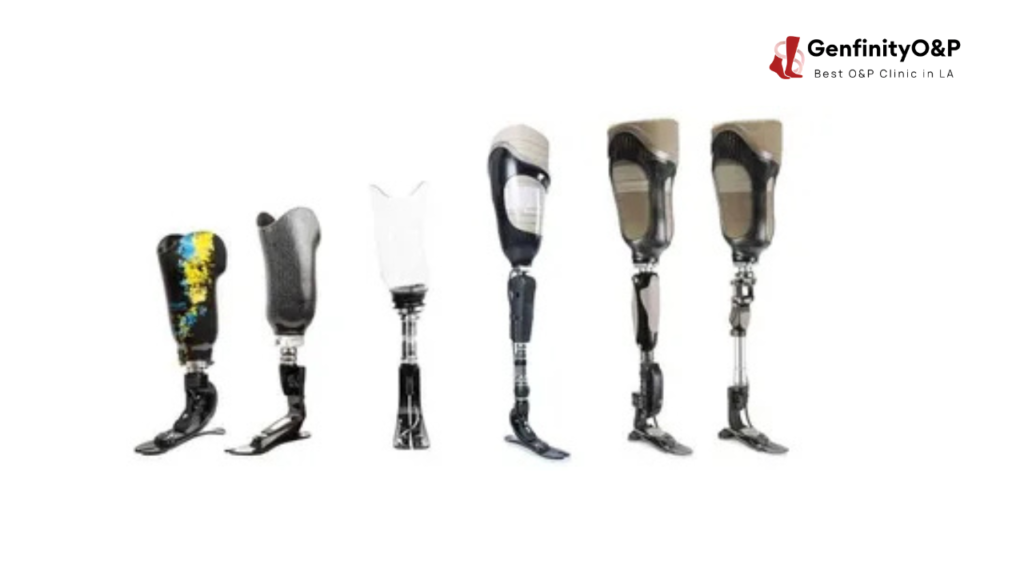
Not all prosthetic legs are the same. The type you need depends on where your amputation occurred, how active you are, and what kind of terrain you walk on. Below is a breakdown of the most common options.
1. Transtibial Prosthetics (Below-the-Knee)
These replace the lower leg from the knee down. They are among the most common type of lower limb prosthetics. People with transtibial prosthetics often regain good walking ability because the knee joint is still intact.
Most below-the-knee users can walk without a cane after proper rehabilitation. Recovery is typically faster than with above-the-knee prosthetics.
2. Transfemoral Prosthetics (Above-the-Knee)
These replace the leg from the thigh down, including the knee. They are more complex and require more energy to use. Learning to walk with a transfemoral prosthetic takes more time and effort.
Modern above-the-knee prosthetics use advanced knee joints. Some use hydraulics. Others use microprocessors to adjust with every step. These technologies make walking safer and more natural.
3. Prosthetic Feet and Ankle Systems
Even if you have a partial foot amputation, a prosthetic foot can help. Energy-storing feet are popular among active users. They compress and release energy with each step, much like a natural foot.
Hydraulic ankle systems allow the foot to adjust automatically on slopes and uneven ground. This reduces the risk of falls and makes outdoor walking much easier.
4. Microprocessor-Controlled Prosthetics
These are the most advanced prosthetic legs available today. They use sensors and a computer chip to track your movement in real time. The device adjusts the knee or ankle up to 50 times per second.
A 2022 study in the Journal of Rehabilitation Research and Development found that microprocessor knee users fell 52% less often than users of non-computerized knees. These prosthetics cost more but offer major safety benefits.
Lower Limb Prosthetics at a Glance
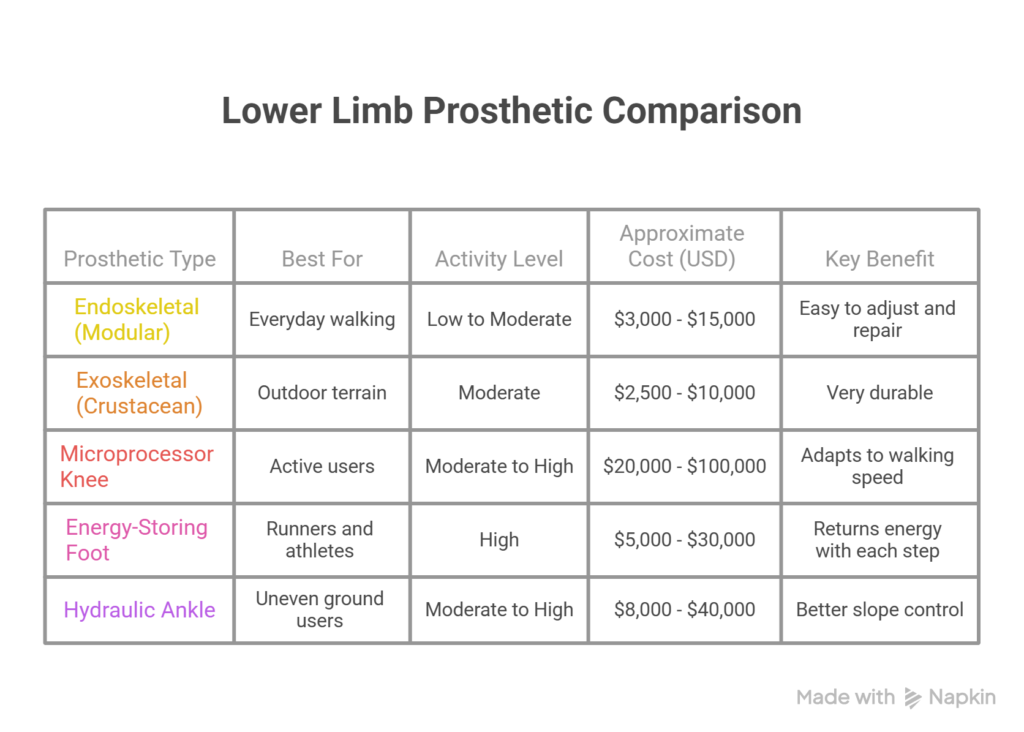
Note: Costs vary widely based on insurance coverage, manufacturer, and country. Always consult your prosthetist for accurate pricing.
The Mobility Recovery Process After Amputation
Recovery after a lower limb amputation takes time. Most people go through a structured rehabilitation process before and after getting their prosthetic. Knowing what to expect can help you stay motivated.
Stage 1: Pre-Prosthetic Training
This stage begins right after surgery. You work with a physical therapist before you even receive a prosthetic leg. The focus is on:
- Strengthening your remaining muscles
- Reducing swelling in the residual limb (the stump)
- Learning to transfer safely from bed to wheelchair
- Improving balance and core strength
This stage usually lasts 4 to 8 weeks, depending on how well your wound heals. A well-prepared body leads to better prosthetic outcomes.
Stage 2: Getting Fitted for a Prosthetic
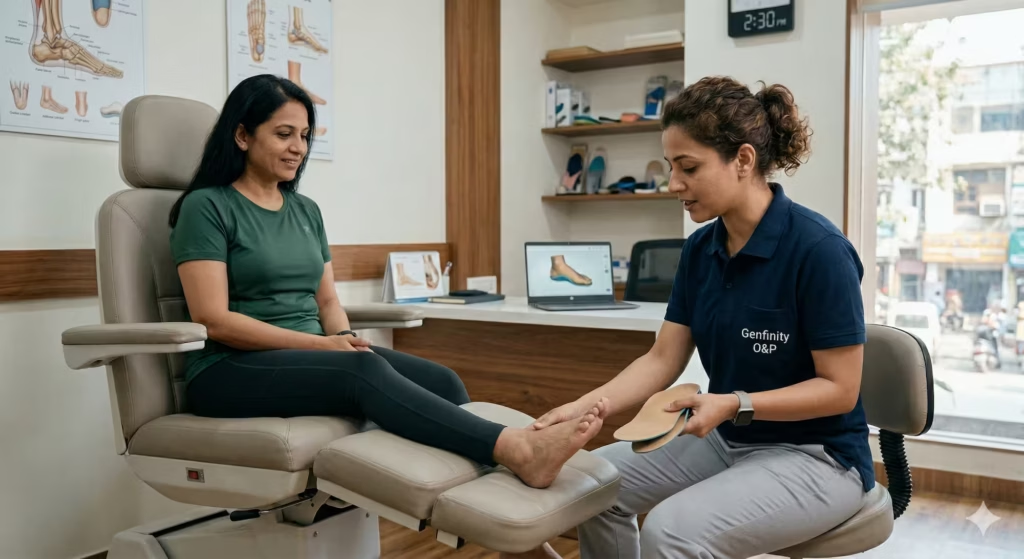
Once your residual limb is stable and healed, you visit a prosthetist. They take measurements and create a custom socket, which is the part that connects your limb to the prosthetic device.
The fit is critical. A poorly fitting socket causes pain, skin problems, and poor walking. Most people need several fitting appointments before the socket feels right. Be patient with this process.
Stage 3: Gait Training
Gait training is learning how to walk again with your new prosthetic. A physical therapist guides you through exercises and drills. You start on flat surfaces and slowly move to more challenging terrain.
Typical gait training milestones include:
- Standing with the prosthetic on flat ground
- Walking between parallel bars with support
- Walking without bars on flat surfaces
- Climbing and descending stairs
- Walking on grass, gravel, and slopes
Expert Insight: Research shows that prosthetic users who complete structured gait training walk 40% faster and fall 35% less often than those who skip formal rehabilitation.
Stage 4: Long-Term Maintenance and Upgrades
Your prosthetic needs regular check-ups. The socket may need adjusting as your residual limb changes shape over time. Many people need a new socket within the first year of use.
As your fitness improves, you may qualify for a more advanced prosthetic device. Always communicate with your prosthetist if something feels off.
Practical Tips for a Faster Recovery
Recovery from a lower limb amputation is a journey. These tips can help you make real progress at each stage.
Take Care of Your Residual Limb
- Wash your residual limb gently every day with mild soap
- Inspect your skin for redness, sores, or blisters after wearing the prosthetic
- Use a clean prosthetic liner each day to avoid infections
- Elevate your limb when resting to control swelling
Build Strength and Stamina
- Do upper body exercises to help with balance and transfers
- Strengthen your hip muscles, as they guide prosthetic movement
- Walk short distances multiple times a day rather than one long walk
- Use a cane or walker until your balance improves
Protect Your Mental Health
Amputation recovery affects your emotions as much as your body. It is normal to feel frustrated, sad, or anxious. These feelings do not mean you are failing.
- Talk to a counselor or therapist who works with amputees
- Connect with peer support groups like the Amputee Coalition community
- Set small, realistic goals and celebrate each achievement
- Stay in regular contact with your care team
Optimize Your Home for Safety
- Remove rugs or floor clutter that can cause trips and falls
- Install grab bars in your bathroom and near stairs
- Use non-slip mats in the shower and kitchen
- Ensure your home has good lighting in all walkways
Trusted Resources and Further Reading
For deeper research and expert guidance, the following resources offer reliable and up-to-date information on prosthetic care and mobility recovery.
Amputee Coalition (amputee-coalition.org) – Peer support, education, and resources for amputees
American Academy of Orthotists and Prosthetists (aopa.org) – Find certified prosthetists and clinical guidelines
You can also explore related articles on prosthetic socket fitting, phantom limb pain management, and returning to sports with a prosthetic leg for more focused guidance.
Conclusion
Lower limb prosthetics have come a long way. Today, people with amputations can walk, run, hike, and live full lives with the right device and proper rehabilitation. The journey takes patience and hard work, but the results are real.
Your recovery is shaped by three things: the right prosthetic, consistent rehabilitation, and a strong support system. Each step you take, no matter how small, is progress.
You do not have to figure this out alone. Work with your care team, connect with other amputees, and keep moving forward.
Ready to learn more on advance upper limb? Read our in-depth guides on prosthetic socket care, gait training exercises, and living actively with a prosthetic leg. Your mobility journey starts with the right information.
This article is for informational purposes only. Always consult a licensed prosthetist or medical professional for personalized advice.