

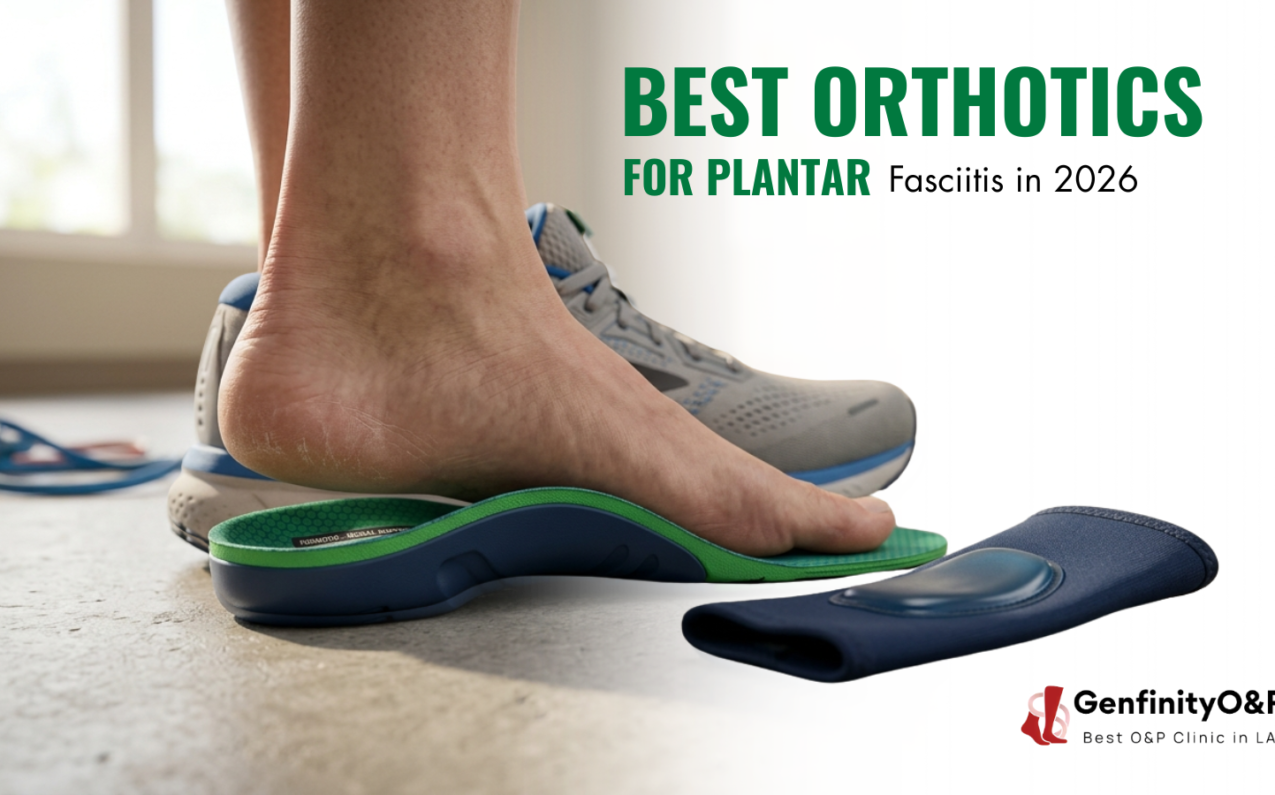
Heel pain can stop you in your tracks. If your first steps in the morning feel like walking on glass, you may have plantar fasciitis. It is one of the most common causes of heel pain in the United States, affecting around 2 million people every year.
The good news is that the right orthotics can make a real difference. They reduce pressure on the plantar fascia, support your arch, and help you move without pain. This guide is part of our complete Custom Orthotics and Prosthetics resource at Genfinity O&P, where we cover the full range of O&P care options available to patients in the United States.
Below, I walk you through the best orthotics for plantar fasciitis, what to look for, and how to use them as part of a full recovery plan.
What Is Plantar Fasciitis and Why Does It Hurt
The plantar fascia is a thick band of tissue that runs along the bottom of your foot. It connects your heel bone to your toes. When this tissue becomes inflamed, it causes sharp pain in the heel or arch area.
Most people feel the worst pain in the morning or after long periods of rest. The pain often eases with movement but returns after standing for hours. Running, walking on hard floors, and wearing flat shoes all make it worse.
Research shows that around 10% of people will develop plantar fasciitis at some point in their lives. It is especially common in runners, teachers, nurses, and anyone who spends long hours on their feet.
How Orthotics Help with Plantar Fasciitis
Orthotics are shoe inserts designed to support and align your feet. For plantar fasciitis, they work by reducing strain on the plantar fascia and distributing pressure more evenly across the foot.
Research published in the Journal of Foot and Ankle Research found that orthotics can reduce plantar fasciitis symptoms in up to 70% of patients within six months of consistent use. That is a strong result for a non-surgical option.
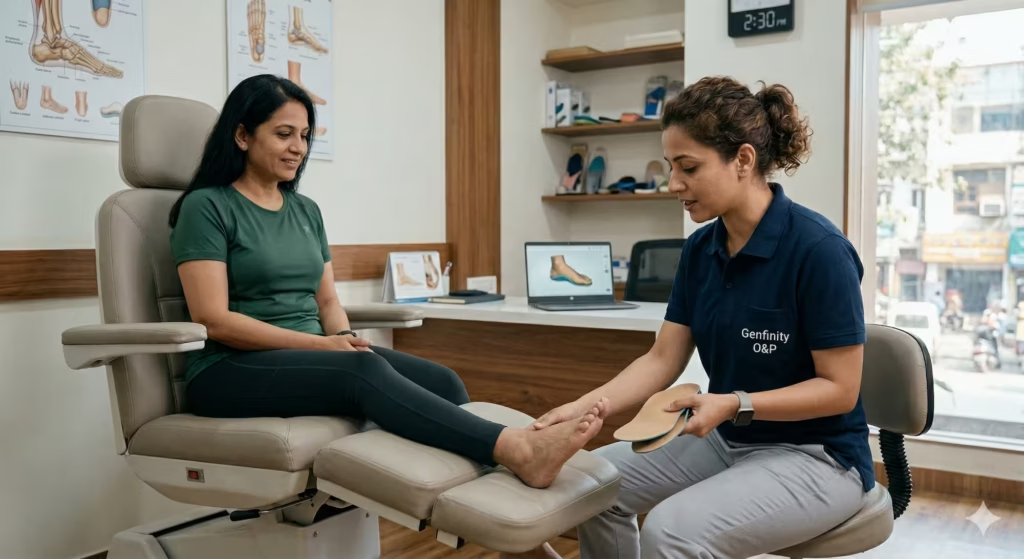
At Genfinity O&P, our certified orthotists use a combination of gait analysis, 3D foot scanning, and clinical assessment to determine the best orthotic design for each patient. No two feet are the same, and no two orthotics should be either.
Key Benefits of Using Orthotics
- Reduce heel and arch pain during walking or standing
- Provide cushioning to absorb shock on hard surfaces
- Correct overpronation, which is a common cause of plantar fasciitis
- Improve foot alignment and overall posture
- Support faster recovery when used alongside stretching and rest
Types of Orthotics for Plantar Fasciitis
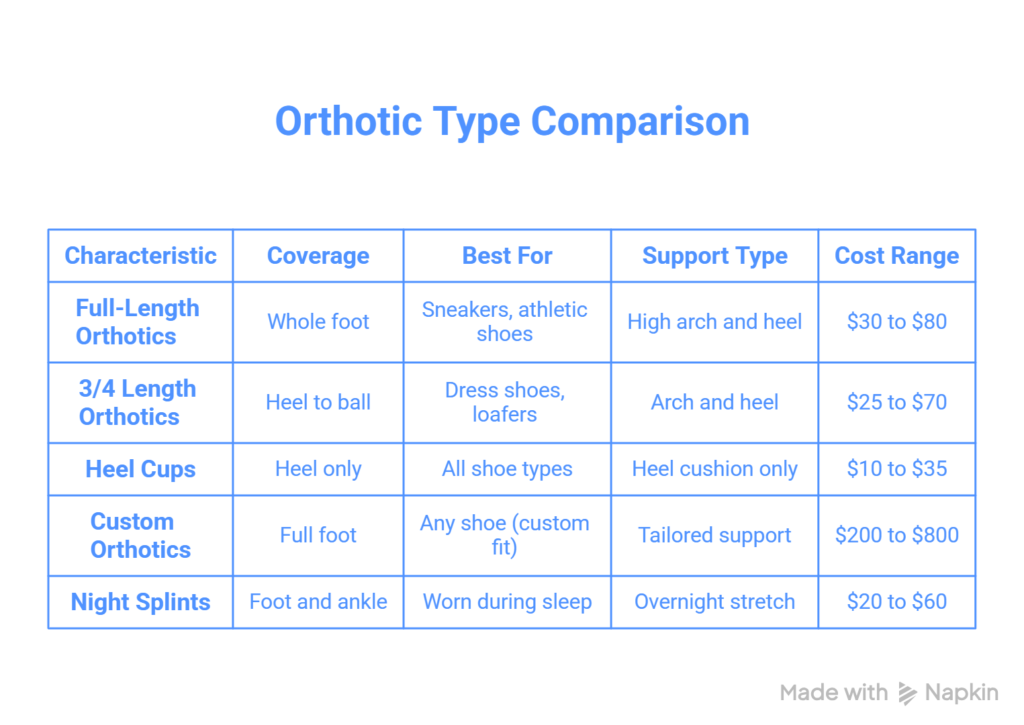
Not all orthotics are the same. Each type serves a different purpose and works best in certain situations. Understanding the differences helps you choose what fits your lifestyle and condition.
Full-Length Orthotics
These run the full length of your shoe and offer support from heel to toe. They are ideal for everyday sneakers and athletic shoes. Full-length orthotics provide maximum contact with the foot, which means better pressure distribution and comfort throughout the day.
3/4 Length Orthotics
These stop just before the ball of your foot. They fit into dress shoes and loafers where full-length inserts would not work. They still offer solid arch and heel support, and many people find them easier to transfer between different shoe pairs.
Heel Cups
Heel cups are small inserts that sit only under your heel. They add cushioning and absorb shock with each step. They are a good starting point for mild plantar fasciitis and are very affordable, often under $20. For moderate or severe cases, they are usually not enough on their own.
Custom Orthotics
Custom orthotics are made from a precise mold or 3D scan of your foot. A certified orthotist creates them specifically for your foot structure and condition. They offer the most accurate fit and support. Cost typically ranges from $200 to $800, but insurance often covers part of the cost when a physician prescribes them. Learn more about when custom devices make sense in our guide on why custom orthotics are worth the investment.
Night Splints
Night splints are worn while you sleep. They hold your foot in a stretched position and prevent the plantar fascia from tightening overnight. This is why morning pain is often the worst. Using a night splint alongside your daytime orthotic can significantly reduce that sharp first-step pain.
What to Look for in the Best Orthotics for Plantar Fasciitis
Buying orthotics without knowing what to look for can lead to wasted money and continued pain. Here are the most important features to evaluate before you buy.
Arch Support
This is the single most important feature. Look for firm arch support that matches the height of your arch. Flat-footed people need more structure. High-arch feet need flexible cushioning that fills the gap under the arch. A certified orthotist can assess your foot type and recommend the correct design.
Heel Cushioning and Cup Depth
A deep heel cup cradles the heel and stops it from rolling inward. This reduces stress on the plantar fascia with every step. Look for a heel cup that is at least 15mm to 20mm deep for meaningful support and stability.
Material and Durability
The best orthotics combine a firm base for support with a softer top layer for comfort. EVA foam, cork, and gel are common materials. Look for products with a lifespan of at least six to twelve months under regular use. Custom orthotics made from polypropylene or carbon fiber can last three to five years.
Fit and Shoe Compatibility
An orthotic that does not fit your shoe will not help. Check sizing options carefully. Many brands offer length-trimmable options so you can customize the fit. For best results, pair your orthotic with a supportive shoe that has a removable insole, a firm midsole, and a wide toe box.
APMA Acceptance
The American Podiatric Medical Association (APMA) gives a Seal of Acceptance to footwear and insoles that meet clinical standards. Choosing APMA-accepted products adds a layer of confidence in quality and clinical effectiveness.
Top Features Found in High-Performing Orthotics
After clinical review and patient feedback, these features consistently appear in orthotics that produce real, lasting results for plantar fasciitis sufferers.
- Deep heel cup of at least 15mm to 20mm depth
- Medial arch support matched to your foot type
- Shock-absorbing base material such as EVA or polypropylene
- A moisture-wicking top cover to reduce friction and blisters
- Trim-to-fit design for easy sizing across shoe types
- Anti-odor treatment for all-day freshness
Custom Orthotics vs Over-the-Counter Insoles for Plantar Fasciitis
One of the most common questions we hear at Genfinity O&P is whether a store-bought insole is good enough or whether a custom orthotic is worth the higher cost. The answer depends on the severity of your condition and your long-term goals.
For mild discomfort or early-stage plantar fasciitis, a quality OTC insole with firm arch support and a deep heel cup is often enough to manage symptoms. For diagnosed moderate or severe plantar fasciitis, particularly when it affects your daily function, a custom orthotic prescribed after a gait analysis delivers better long-term outcomes.
A full side-by-side breakdown covering cost, effectiveness, and durability, read our complete Custom Orthotics and Prosthetics guide, which includes a detailed comparison table of custom versus OTC options.
Practical Tips for Recovering from Plantar Fasciitis
Orthotics work best when combined with other recovery habits. Using them alone is helpful, but pairing them with these practices will speed up your healing significantly.
Stretching Routines
Stretching the calf and plantar fascia every morning is one of the most effective ways to reduce pain. Before getting out of bed, flex your foot upward and hold for ten seconds. Repeat ten times. This warms up the tissue and reduces that sharp morning pain.
Simple Stretches That Work
- Towel stretch: Loop a towel around your foot and pull it toward you while keeping your knee straight. Hold for 30 seconds.
- Calf stretch on a step: Stand on a step edge and lower your heel slowly. Hold for 20 seconds.
- Frozen water bottle roll: Roll your foot over a frozen water bottle for 5 minutes to reduce inflammation.
Footwear Choices
Wearing supportive shoes matters just as much as your orthotics. Avoid walking barefoot on hard floors. Choose shoes with a cushioned heel and firm midsole. Flip-flops and flat shoes with no arch support will slow your recovery. If you are unsure which shoes work best with orthotics, our team at Genfinity O&P can guide you based on your foot type and condition.
Rest and Ice
Rest is not optional when you are recovering from plantar fasciitis. Avoid activities that put heavy load on your heel, such as running or jumping, until pain levels drop. Apply ice to the bottom of your foot for 15 to 20 minutes after activity to reduce swelling and inflammation.
Weight Management
Body weight directly affects how much pressure lands on your plantar fascia. Studies show that every extra pound of body weight adds roughly three to four pounds of force on your feet when walking. Maintaining a healthy weight significantly reduces strain on the plantar fascia and speeds recovery.
Gradual Return to Activity
Once your pain improves, ease back into exercise slowly. A 10% weekly increase in activity intensity is the guideline used by most sports medicine professionals. Returning too quickly is one of the most common reasons plantar fasciitis comes back.
Breaking In Your Orthotics
New orthotics need a break-in period. Start by wearing them for two to three hours per day and gradually increase over one to two weeks. This gives your feet and muscles time to adjust to the new support pattern. Jumping straight to full-day wear can cause temporary soreness even with a well-fitted device.
When to See a Doctor or Certified Orthotist
Most cases of plantar fasciitis improve with orthotics, stretching, and rest within three to six months. However, you should see a podiatrist, orthopedic specialist, or certified orthotist if your pain is severe, not improving after eight weeks of treatment, or affecting your ability to walk normally.
A healthcare provider may recommend physical therapy, corticosteroid injections, or in rare cases a procedure called plantar fasciotomy to release the tight tissue. Early treatment usually leads to better outcomes, so do not wait too long if home care is not working.
At Genfinity O&P in Tarzana, Los Angeles, our certified orthotists perform full gait analysis and foot assessments before recommending any device. You can book a free consultation to get started. You can also find authoritative treatment guidance from the American Academy of Orthopaedic Surgeons and the American Podiatric Medical Association.
Expert Insight on Orthotics for Plantar Fasciitis
Based on clinical practice and patient outcomes, the most effective approach to treating plantar fasciitis combines three things: proper orthotics, daily stretching, and the right footwear. Orthotics alone reduce pain, but without addressing muscle tightness and shoe quality, results may be limited.
For patients with moderate to severe symptoms, a custom orthotic prescribed after a full gait analysis provides the best long-term outcome. For mild cases or early-stage plantar fasciitis, a quality over-the-counter insert with firm arch support and a deep heel cup is often enough to manage symptoms effectively.
One thing our clinical team at Genfinity O&P always advises: do not wait too long before getting proper support. The earlier you use the right orthotic, the less likely your plantar fascia will develop chronic inflammation, which is far harder to treat.
Related Reading on Genfinity O&P
Plantar fasciitis is just one condition that orthotics can help with. If you want to go deeper on related topics, these guides from our site cover the most frequently asked questions we see from patients.
- Custom Orthotics and Prosthetics: Complete Guide to Modern O&P Care – Our pillar guide covering all aspects of orthotic and prosthetic care, costs, insurance, and the full fitting process.
- Best Custom Orthotics for Flat Feet – Expert guide to arch support and pain relief for flat-footed patients.
- Orthotics for Knee Pain – What they are, how they work, and when they help with knee-related conditions.
- Custom Made Orthotics: Benefits, Process and Results – A step-by-step look at what happens when you get custom orthotics made from a certified provider.
Conclusion
Plantar fasciitis is painful, but it is very treatable. The right orthotics can reduce your heel pain, support your arch, and help you return to normal activity faster. Whether you start with a quality over-the-counter insole or move straight to a custom orthotic from a certified orthotist, the key is to start support early and stay consistent.
Pair your orthotics with daily stretching, proper footwear, and enough rest. Most patients see real improvement within a few weeks. You do not have to live with heel pain every day.
Ready to find lasting relief from plantar fasciitis? Our certified orthotists at Genfinity O&P in Tarzana, Los Angeles are ready to help. Book your free consultation today or call us at +1 (888) 552-6188. Also explore our full guide to custom orthotics and prosthetics to see the complete range of O&P care options available to you.