

Introduction
Overpronation is one of the most common foot problems in the world. Yet most people do not know they have it. They just feel tired feet, aching arches, or sore knees. The pain seems random. But the cause is often the same thing.
In this guide, you will learn what overpronation is, why it happens, and how to treat it. I will also share practical steps you can take today to ease pain and protect your joints for years to come.
Keypoints
◉ Overpronation means your foot rolls too far inward
◉ Normal vs overpronation: slight vs excessive inward roll
◉ Shoes wear more on the inner side
◉ Flat arches and inward-tilting ankles are common signs
◉ Causes include flat feet, weak muscles, and poor shoes
◉ It can lead to foot, knee, and back pain
◉ Stretching and strengthening help improve control
◉ Supportive shoes reduce stress on your feet
◉ Healthy habits speed up recovery
◉ See a specialist if pain continues
What Is Overpronation
To understand overpronation, you first need to know what pronation is. Pronation is the natural inward roll of your foot when you walk or run. It helps your foot absorb shock. It is normal and healthy.
Overpronation means your foot rolls too far inward. Instead of a slight, controlled roll, your arch flattens too much. Your ankle tilts inward. Your entire lower body then works harder to compensate.
Studies show that overpronation affects around 20 to 30 percent of the general population. It is especially common in people with flat feet. But even people with normal arches can overpronate.
How Overpronation Differs from Normal Pronation
Normal pronation involves a 15-degree inward roll during the gait cycle. Overpronation goes beyond that. The foot rolls inward more than 15 degrees. The arch collapses toward the ground. The big toe and second toe carry most of your body weight alone.
This small difference creates a big chain reaction. Your shin rotates inward, knee follows and hip tilts. Over time, this misalignment causes pain in multiple areas of the body.
Signs and Symptoms of Overpronation
Overpronation does not always cause immediate pain. Some people live with it for years without knowing. But there are common signs to watch for.
Physical Signs You Can See
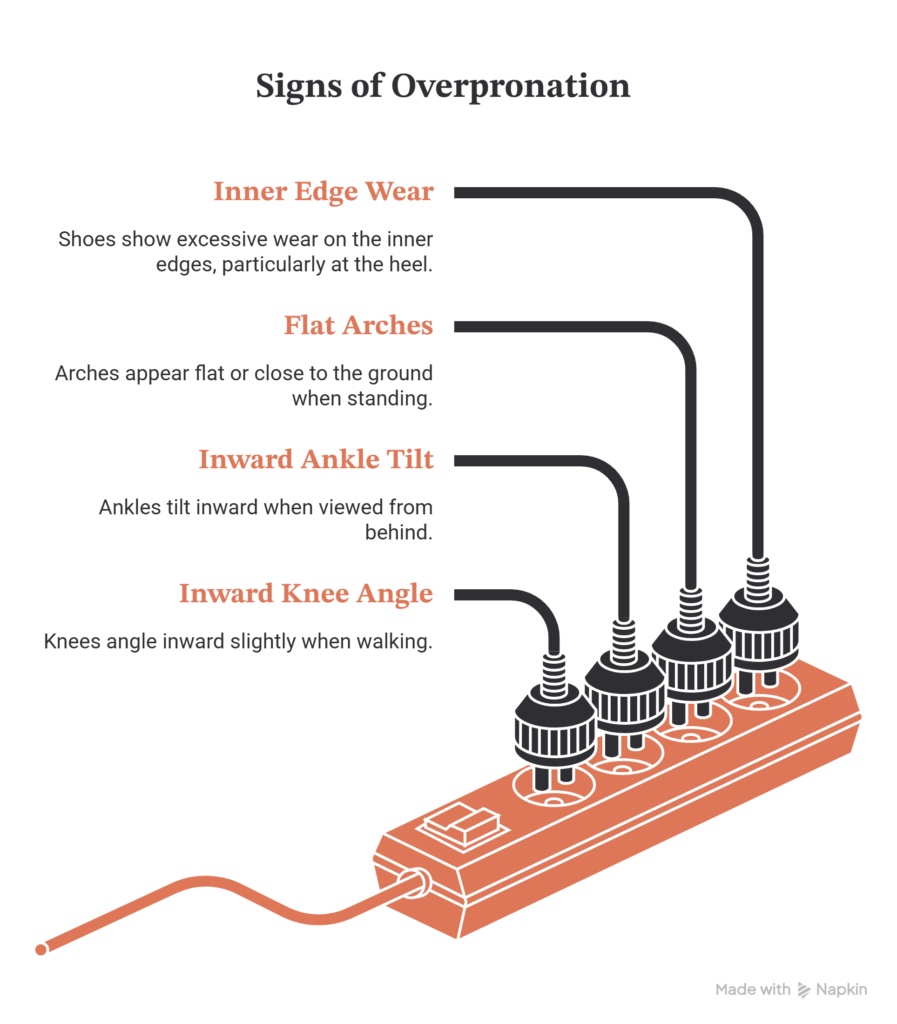
- Firstly, shoes wear down on the inner edges, especially at the heel
- In addition,Your arches look flat or close to the ground when you stand
- Moreover, Your ankles tilt inward when you look at yourself from behind
- Finally, Your knees appear to angle slightly inward when you walk
Pain and Discomfort You May Feel
- Arch pain or burning along the bottom of your foot
- Moreover,Heel pain, especially in the morning (often linked to plantar fasciitis)
- Shin splints or pain along the front of your lower leg
- Knee pain, especially on the inner side
- Hip or lower back discomfort after long periods of walking
If you notice two or more of these signs, there is a good chance overpronation is involved. A podiatrist or orthotist can confirm this with a simple gait analysis.
What Causes Overpronation
Overpronation is not always the result of one thing. Several factors can lead to it. Understanding the cause can help you choose the right treatment.
Flat Feet
Flat feet are the most common cause of overpronation. When your arch is low or absent, your foot naturally collapses inward with each step. This places extra stress on the tendons and muscles that support your ankle.
People with flat feet are at much higher risk of overpronation. Learn more about how custom orthotics can help people with flat arches in our guide on custom orthotics for flat feet.
Weak Muscles and Poor Flexibility
Weak hip, calf, or ankle muscles allow the foot to roll in without resistance. Tight calves and Achilles tendons also pull the heel inward. Both issues can cause or worsen overpronation.
Worn or Wrong Footwear
Shoes with poor arch support allow the foot to collapse inward. Worn-out shoes lose their cushioning and stability. High heels shift weight forward and inward. All of these increase overpronation risk.
Genetics and Body Weight
Some people are born with foot structures that make overpronation more likely. Excess body weight adds pressure to the arch and can flatten it over time. Pregnancy can also temporarily flatten arches due to added weight and hormonal changes.
Overpronation vs Supination vs Normal Gait
It helps to compare overpronation with other gait patterns. The table below shows the key differences.
| Feature | Normal Gait | Overpronation | Supination |
| Foot Roll | Slight inward (15 deg) | Excessive inward (over 15 deg) | Outward roll |
| Arch Type | Medium arch | Low or flat arch | High arch |
| Shoe Wear Pattern | Even wear | Inner heel and ball | Outer edges |
| Common Injury Risk | Low | Plantar fasciitis, shin splints, knee pain | Ankle sprains, IT band issues |
Health Risks of Untreated Overpronation
Overpronation may seem like a small foot issue. But left untreated, it can lead to several serious problems throughout your body.
Plantar Fasciitis
This is the most common complication. The plantar fascia is a band of tissue that runs along the bottom of your foot. When your arch collapses repeatedly, it stretches and strains this band. The result is sharp heel pain, especially with the first steps in the morning.
If you already deal with heel pain, read our detailed guide on the best orthotics for plantar fasciitis to find the right support option.
Shin Splints
When the foot rolls inward, the tibia (shin bone) twists slightly with each step. This repeated twisting inflames the muscles and tendons around the shin. Runners are especially prone to this injury.
Knee and Hip Pain
The inward roll of the foot tilts the knee inward too. This places uneven pressure on the knee joint. Over time, it can wear down cartilage and lead to pain or even early arthritis. Hip pain develops when your body tries to compensate by adjusting its stride.
Lower Back Pain
The imbalance that starts at your feet travels up your entire spine. Your pelvis tilts to one side. Your lower back muscles overwork. Many people with chronic lower back pain have overpronation they never knew about.
How to Treat Overpronation
The good news is that overpronation is very treatable. In most cases, you do not need surgery. A combination of the right footwear, orthotics, and targeted exercises can make a big difference.
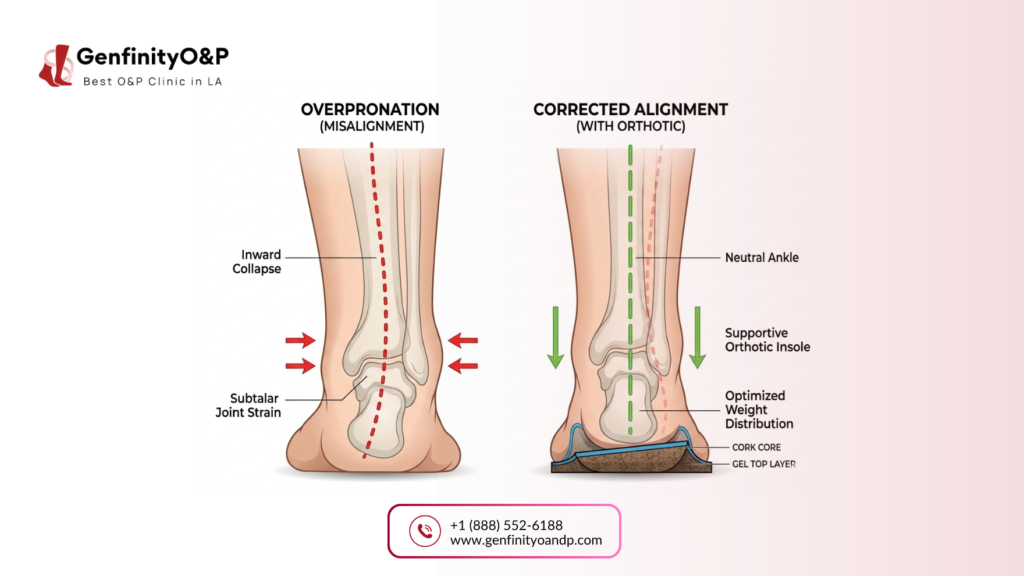
Custom Orthotics
Custom orthotics are specially made shoe inserts designed to correct the alignment of your foot. They support the arch, control inward rolling, and redistribute pressure evenly across the foot.
Unlike off-the-shelf insoles, custom orthotics are built from a mold of your specific foot. This means they correct your unique gait pattern. Research shows custom orthotics reduce overpronation-related pain in 68 to 85 percent of cases.
To explore all the ways custom orthotics can help your movement and comfort, visit our complete guide to custom orthotics and prosthetics.
Motion Control Shoes
Motion control running shoes are built with a firm inner edge and a rigid heel. They are designed to limit excessive inward rolling. Stability shoes are a lighter version of the same idea. Both work well for mild to moderate overpronation.
Stretching and Strengthening Exercises
Specific exercises can reduce overpronation by building strength in key muscles. A physical therapist can guide you. But here are four exercises that many people find helpful.
- Calf stretches held for 30 seconds on each leg, twice daily
- Towel scrunches with your toes to strengthen arch muscles
- Single-leg calf raises on a step for ankle stability
- Side-lying hip abductions with a resistance band for hip control
These exercises do not replace orthotics. But they work very well alongside them.
Taping and Bracing
Athletic tape or ankle braces can provide short-term support during sports or activity. This is useful while you wait for custom orthotics or as part of a post-injury recovery plan. Ask a sports medicine professional for the correct taping technique.
Practical Tips to Recover from Overpronation
Recovery from overpronation-related pain takes time and consistency. These tips will help speed up the process.
- Replace shoes every 300 to 500 miles or sooner if the soles wear unevenly
- Always warm up before walking or running to prepare your muscles
- Choose supportive footwear for daily activities, not just sports
- Avoid walking barefoot on hard floors if you have flat feet
- See an orthotist or podiatrist for a professional gait analysis
- Do not ignore mild pain as it often signals early overpronation stress
- Use a foam roller on calves and arches to release muscle tightness
- Maintain a healthy weight to reduce pressure on the arch
One important insight I have seen in clinical settings is this: most people wait too long before seeking help. If your inner shoe heel wears out faster than the outer side, that is an early warning sign. Act on it early.
What Experts Say About Overpronation
The medical community has studied overpronation for decades. Research published in the Journal of Orthopaedic and Sports Physical Therapy confirms that corrective footwear and orthotics significantly reduce lower limb injury risk in overpronators.
The American Academy of Orthopaedic Surgeons (AAOS) also provides guidance on flat foot and adult-acquired flatfoot conditions. You can read their clinical overview at orthoinfo.aaos.org.
For a deeper look at pronation biomechanics and how it affects running injuries, the British Journal of Sports Medicine offers peer-reviewed research at bjsm.bmj.com.
When to See a Professional
Some cases of overpronation need professional care. You should see a specialist if you experience any of the following.
- Pain that does not improve after two to three weeks of rest and new shoes
- Sharp heel pain every morning when you first stand up
- Swelling around the ankle or arch area
- Pain that travels up into your knees, hips, or lower back
- Difficulty walking without limping or compensating
An orthotist, podiatrist, or physical therapist can run a gait analysis. They will look at how your foot moves in real time. From there, they can recommend the best mix of orthotics, footwear, and exercises for your specific situation.
Conclusion
Overpronation is a common foot condition where your arch collapses too far inward with each step. It can cause pain in your feet, knees, hips, and back. But it is also one of the most manageable foot problems with the right approach.
The key steps are clear. Get the right shoes. Use custom orthotics if needed. Stretch and strengthen the muscles that support your arch. And do not wait until the pain becomes serious before you act.
Small changes to how you walk, stand, and support your feet can lead to a big reduction in pain and a better quality of life. Start with what you wear on your feet and go from there.