

Introduction
If your feet ache after a short walk, or your shoes wear out unevenly at the heel and ball, you may have high arches. Orthotics for high arches can ease pressure points, restore balance, and help your feet move the way they are meant to. This guide covers what causes high arches, how orthotics help, and how to choose the right pair for lasting relief. For a wider look at supportive footwear solutions, see our full guide on custom orthotics and prosthetics.
Keypoints
◉ Heel pain often starts from plantar fasciitis or repeated foot strain
◉ Poor foot alignment increases pressure directly on the heel
◉ Overpronation adds extra stress to the plantar fascia
◉ Flat feet or weak arches can worsen heel pain over time
◉ Pain is usually sharp in the morning or after long rest
◉ Standing for long hours or wearing poor footwear can trigger discomfort
◉ Orthotics help distribute pressure evenly across the foot
◉ They support the arch and reduce strain on the heel
◉ Custom orthotics provide more targeted relief than generic insoles
◉ Consistent use improves comfort and reduces pain within weeks
What Are High Arches
High arches, known clinically as pes cavus, describe a foot where the arch stays raised even during standing. Instead of flattening slightly to absorb impact, a high arch stays rigid. This shifts pressure onto the heel and the ball of the foot.
Studies suggest pes cavus affects close to ten percent of the general population, though estimates vary depending on how researchers measure the arch. Many people live with mild high arches and never notice a problem. Others deal with ongoing pain, instability, and fatigue.
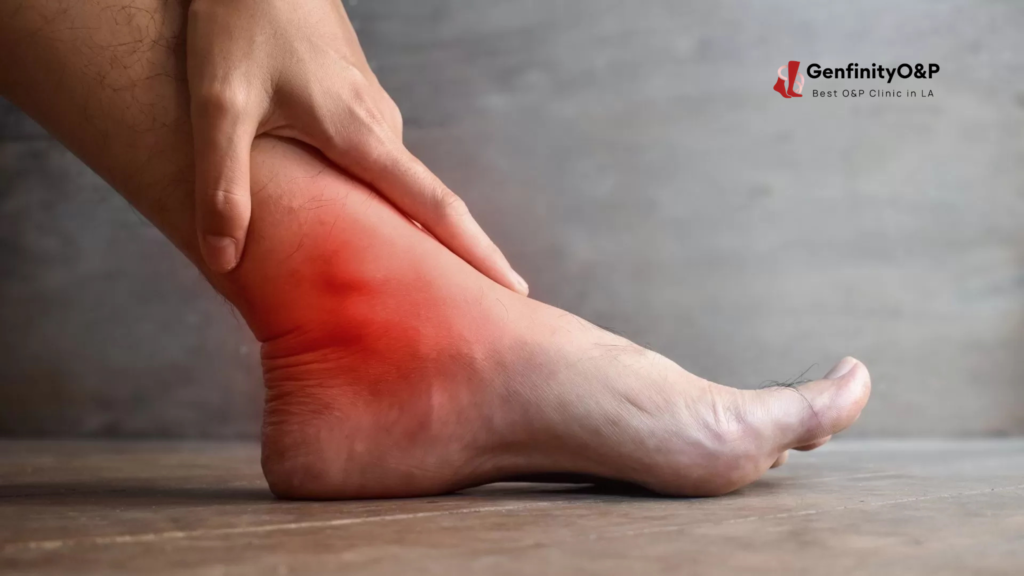
In our own fittings, we notice a pattern. Patients with high arches often describe their pain as sharp and localized, rather than the dull, spread out ache common with flat feet. That distinction matters, because it points directly toward the type of support that will help.
What Causes High Arches
High arches often run in families. Some people are simply born with a foot structure that keeps the arch elevated. In other cases, the cause is linked to nerve or muscle conditions that change how the foot bones sit and move.
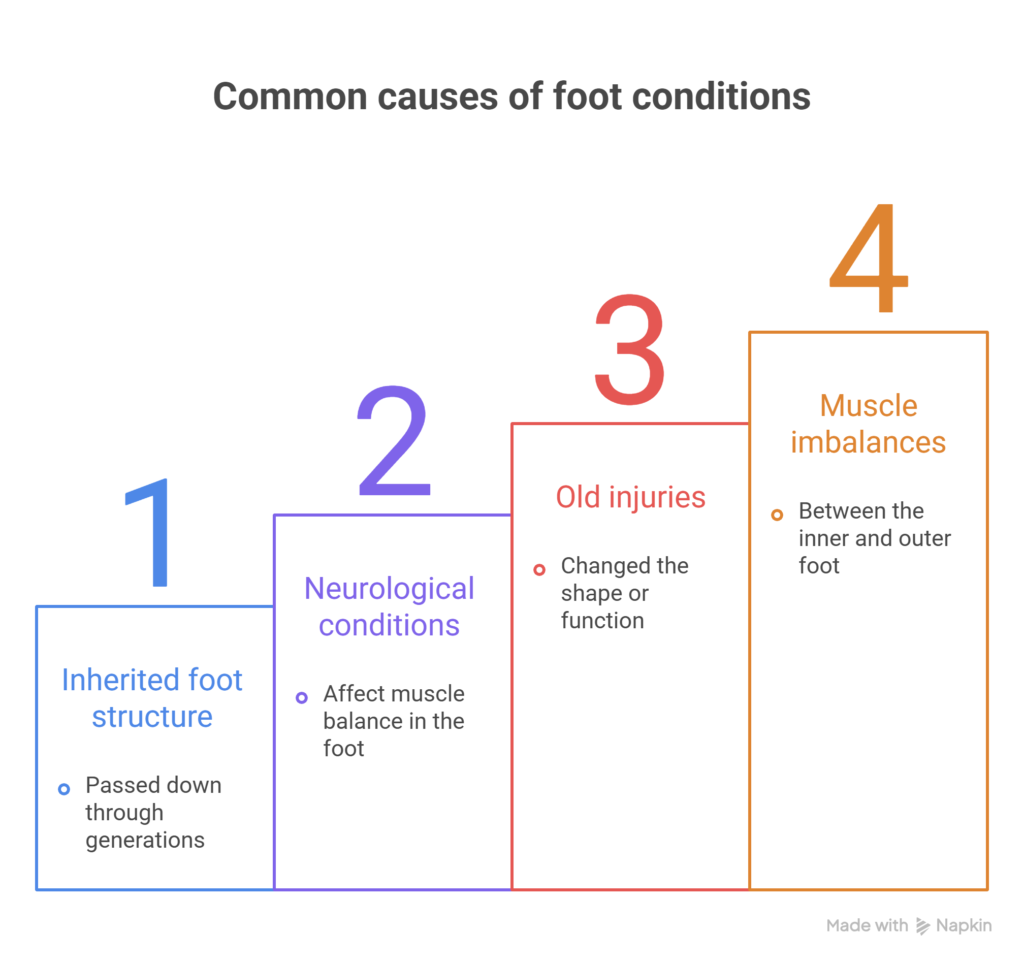
A podiatrist can confirm the exact cause through a physical exam and a short gait assessment. This step matters more than people expect. Two people can share the same visible arch height, yet need very different treatment plans depending on whether the cause is structural or neurological.
During an assessment, a specialist typically watches you walk, checks the flexibility of your midfoot, and looks for related signs such as clawed toes or a tilted heel. This information shapes how firm or flexible your orthotics should be.
Common Symptoms of High Arches
Foot and Heel Pain
Because a high arch does not flatten to absorb shock, force lands hard on the heel and forefoot. This can lead to soreness after standing, walking, or running. Many people with high arches also develop plantar fasciitis, which causes sharp heel pain that is often worse in the morning. Our guide on the best orthotics for plantar fasciitis covers this connection in more detail.
Ankle Instability
High arches often come with a tighter, less flexible foot. This can make the ankle roll outward more easily, which leads to frequent sprains or a general feeling of being unsteady on uneven ground.
Calluses and Pressure Points
Since weight concentrates on smaller areas of the foot, calluses often form under the heel and the ball of the foot. Clawed toes are also common, which adds friction and rubbing inside shoes.
Fatigue and Reduced Shock Absorption
A rigid arch cannot flex the way a neutral foot does. Every step sends more force straight up through the foot and leg instead of being softened first. Over a full day, this adds up to noticeable fatigue, especially for people who stand for long shifts or walk on hard floors.
Why High Arches Need Targeted Support
A high arch foot moves differently than a flat or neutral foot. While overpronation causes the arch to collapse inward, a high arch does the opposite. It resists the natural rolling motion the foot needs during walking, which limits shock absorption at every step.
Generic cushioning rarely solves this. Off the shelf insoles are built for average arches and often miss the contour of a high arch completely. If you want to compare foot types, our article on custom orthotics for flat feet shows how differently the opposite condition behaves.
How Orthotics Help People With High Arches
Shock Absorption
Custom orthotics add cushioning exactly where a high arch foot needs it most, especially at the heel and forefoot. This reduces the jarring impact that builds up during standing and walking.
Even Weight Distribution
A well designed orthotic spreads pressure across a wider portion of the foot instead of letting it concentrate on a few points. This lowers the risk of calluses, stress fractures, and chronic soreness.
Better Alignment Up the Leg
Foot position affects the knees, hips, and lower back. When a high arch throws off alignment at the base, the effect can travel upward through the whole leg. Our article on orthotics for knee pain explains how foot support influences the joints above it.
Orthotics for High Arches vs Standard Orthotics
The table below shows how orthotics built for high arches differ from standard, general purpose inserts.
| Feature | High Arch Orthotics | Standard Orthotics |
| Arch Contour | Deep, matched to a raised arch | Shallow, built for an average arch |
| Cushioning Focus | Heel and forefoot zones | Even, general cushioning |
| Shell Material | Semi-rigid shell with soft padding | Basic foam throughout |
| Best Suited For | Pes cavus, supination, ankle instability | Neutral or mild arch concerns |
| Custom Fit | Yes, molded or scanned to the foot | No, one size fits most |
Choosing the Right Orthotics for High Arches
Custom Orthotics
Custom orthotics are built from a mold or digital scan of your exact foot shape. They cost more upfront but tend to last longer and offer the most precise support for pes cavus.
Semi-Custom and Off the Shelf Options
These options work well for mild symptoms or tighter budgets. They come pre-shaped for common high arch patterns and can often be adjusted with heat molding or added padding.
Materials That Matter
Look for a semi-rigid shell that holds its shape under body weight, paired with soft top cushioning. Materials like EVA foam, cork, and polypropylene are common choices, each offering a different balance of support and flexibility.
How Custom Orthotics Are Fitted
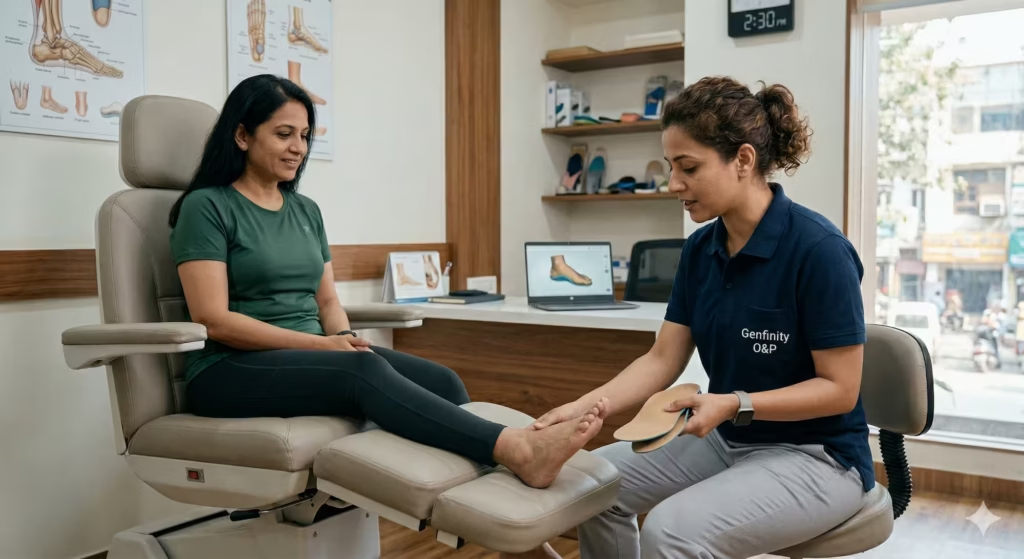
Getting fitted for custom orthotics usually starts with a foot exam, followed by a mold, scan, or foam impression of your foot in a neutral position. This capture reflects the exact height and shape of your arch rather than an average estimate.
A lab then builds the orthotic shell around that shape, often adding extra support under the heel or forefoot based on where your pain is concentrated. Fitted orthotics typically need one short follow up visit to adjust pressure points once you have worn them for a week or two.
Cost of Orthotics for High Arches
Prices vary widely based on material, customization, and where you get fitted. Custom orthotics from a podiatrist typically cost more than drugstore inserts, but they address your specific foot shape and last longer with proper care. Our full orthotics cost guide breaks down what affects pricing and how to budget for the right pair.
Best Shoes to Pair With High Arch Orthotics
Orthotics work best inside shoes with a removable insole and enough depth to fit the extra support. Look for a firm heel counter and enough width in the toe box to prevent rubbing. Our guide on the best shoes for orthotics lists the specific features to check before buying.
Practical Tips for Recovery and Comfort
- Wear new orthotics for short periods at first, then build up daily wear time
- Stretch your calves and plantar fascia each morning before standing
- Choose shoes with a stable, structured base rather than soft, unstructured soles
- Replace orthotics every one to two years or when cushioning wears flat
- Ice the heel and arch after long days on your feet
- Avoid walking barefoot on hard floors for long periods
Small, consistent habits tend to matter more than any single product. Pairing supportive orthotics with regular stretching and the right footwear gives your feet the best chance of staying pain free long term.
When to See a Foot and Ankle Specialist
See a specialist if pain lasts more than a few weeks, if you notice frequent ankle sprains, or if calluses keep returning despite good footwear. A podiatrist can confirm whether heel pain or plantar fasciitis is linked to your arch type, and can guide you toward the right level of support.
Research reviewed by Cochrane on foot orthoses found that a majority of people with pes cavus experience ongoing foot pain at some point, and that properly fitted orthotics showed a measurable improvement in comfort compared with standard inserts. Background resources from the American Podiatric Medical Association offer further reading on how proper support affects long term mobility.
Frequently Asked Questions
Do high arches always need orthotics
Not always. Mild high arches without pain may not need treatment. Orthotics become useful once symptoms like heel pain, calluses, or instability appear.
Can orthotics fix high arches permanently
Orthotics manage symptoms and improve function. They do not change bone structure, but they reduce pain and protect the foot during daily activity.
How long does it take to adjust to new orthotics
Most people need one to two weeks of gradual wear to adjust fully without soreness.
Can high arches get worse over time
Some cases stay stable for life, while others gradually become more rigid, especially when a neurological condition is involved. Regular checkups help track any change and adjust support before symptoms worsen.
Conclusion
High arches do not have to mean constant foot pain. The right orthotics cushion pressure points, support natural alignment, and make daily movement easier. Whether you choose a custom pair or a well fitted semi-custom option, consistent support makes a real difference over time.
Ready to find the right fit for your feet. Reach out to Genfinity O&P for a personal fitting and start walking with real support.