

Introduction
Heel pain can turn an ordinary day into a struggle. Every step reminds you that something is wrong. Plantar fasciitis is the most common cause of heel pain in adults, and researchers estimate that about one in ten people will experience it at some point in their life.
The good news is that most cases improve with the right care. Orthotics are one of the most effective tools for easing heel pain and helping your foot heal properly. In this guide, we will look at what causes heel pain, how orthotics help, and what you can do at home to speed up your recovery.
Keypoints
◉ Heel pain often starts from plantar fasciitis or repeated foot strain
◉ Poor foot alignment increases pressure directly on the heel
◉ Overpronation puts extra stress on the plantar fascia and heel
◉ Flat feet or weak arches can worsen heel pain over time
◉ Pain is usually sharp in the morning or after long rest
◉ Standing long hours or bad shoes can trigger heel discomfort
◉ Orthotics help distribute pressure evenly across the foot
◉ They support the arch and reduce strain on the heel
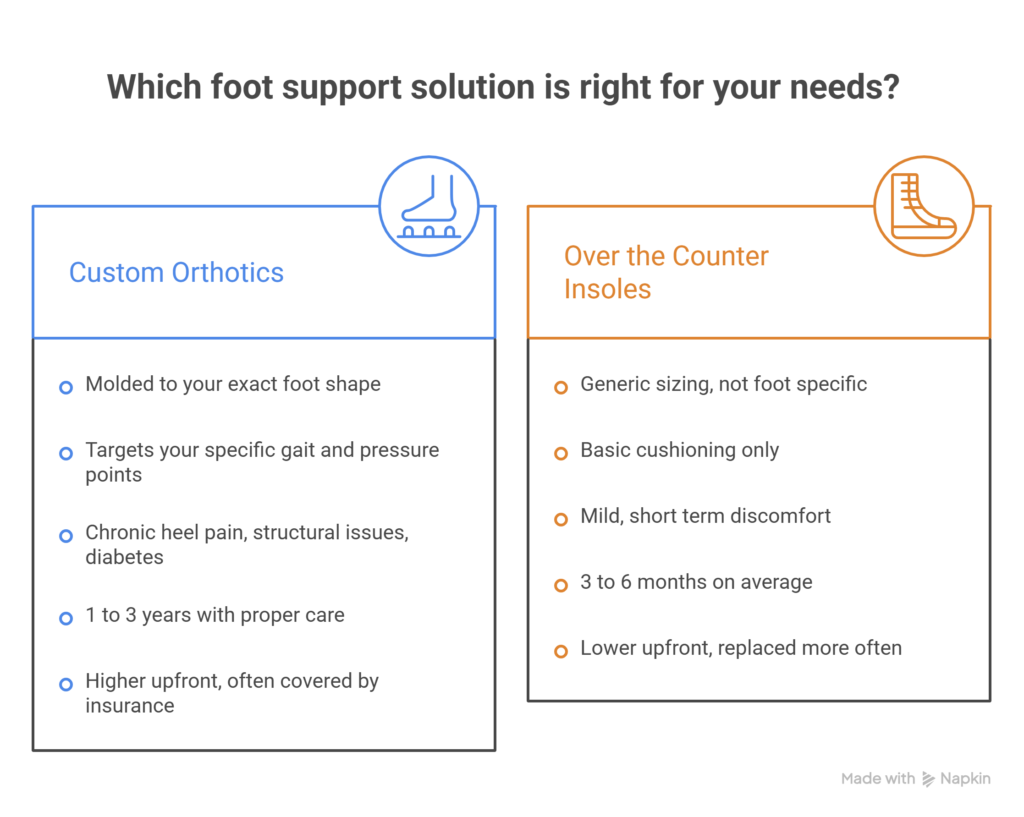
◉ Custom orthotics provide better relief than generic insoles
◉ Consistent use can improve comfort and reduce pain within weeks
What Causes Heel Pain
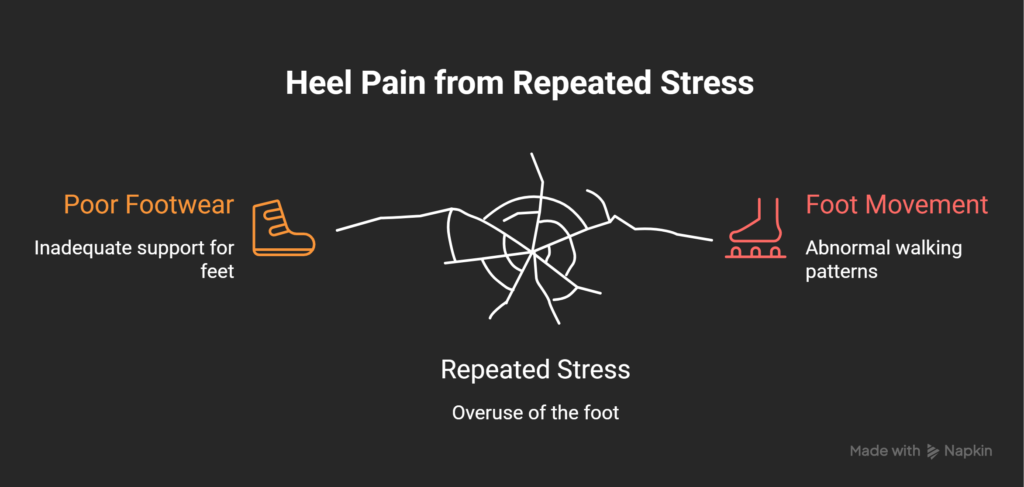
Heel pain rarely comes from one single problem. It usually builds up over time from repeated stress on the foot, poor footwear, or the way your foot moves when you walk.
Plantar Fasciitis
Plantar fasciitis happens when the band of tissue running from your heel to your toes becomes irritated. This band, called the plantar fascia, absorbs shock every time your foot strikes the ground.
Repeated strain can cause tiny tears in the tissue. Over time this leads to stiffness and a sharp pain near the heel, especially with your first steps in the morning.
You can read more in our detailed article on orthotics for plantar fasciitis for a closer look at symptoms and support options.
Overpronation and Foot Mechanics
The way your foot rolls when you walk plays a big role in heel pain. If your foot rolls too far inward, a condition known as overpronation, extra stress lands on the plantar fascia and heel. Learn more in our guide on what overpronation is and how it affects your feet.
Other Common Causes
Heel pain can also come from heel spurs, Achilles tendinitis, stress fractures, or shoes with poor support. Carrying extra body weight, standing for long hours, or increasing exercise too quickly can add extra pressure to the heel as well.
Age plays a role too. As we get older, the fat pad under the heel naturally thins, which reduces the foot’s built in shock absorption. This makes supportive orthotics even more valuable for older adults who spend a lot of time on their feet.
Flat feet are another common trigger. If your arches sit low, our page on custom orthotics for flat feet explains how proper support can ease the strain on your heel.
Understanding the Numbers Behind Heel Pain
Heel pain is more common than most people assume. It is not a rare complaint or something that only affects athletes.
A clinical review published through the National Institutes of Health notes that plantar fasciitis is the most frequent cause of heel pain seen in outpatient care, accounting for a large share of the roughly one million related visits recorded each year in the United States.
Data summarized by the National Center for Complementary and Integrative Health also shows that adult women report plantar fasciitis roughly two and a half times more often than men, with the condition becoming most common in midlife.
These figures matter because they show heel pain is a widespread and well studied condition. You are not dealing with something unusual, and there are proven ways to manage it.
How Orthotics Help With Heel Pain
Orthotics are shoe inserts designed to correct the way your foot moves and to spread pressure more evenly across the foot. They do not just add cushioning. They change how your foot functions with every single step.
Cushioning and Shock Absorption
Every step you take sends force through your heel bone. A quality orthotic absorbs some of that force before it reaches the bone and soft tissue. This lowers the daily wear and tear that keeps heel pain going.
Arch Support and Alignment
A well designed orthotic supports your arch and keeps your foot in a more neutral position. This lowers the strain placed on the plantar fascia and helps correct problems like overpronation before they get worse.
Reducing Strain on the Plantar Fascia
By supporting the arch and cushioning the heel, orthotics take pressure off the plantar fascia so it has a real chance to heal. This is especially helpful for anyone managing long term or recurring heel pain.
Custom Orthotics vs Over the Counter Insoles
Not every insert works the same way. Some people find relief with a store bought pair, while others need a custom option built for their exact foot shape and gait pattern. The table below breaks down the main differences.
For a full breakdown of pricing, our orthotics cost guide explains what factors into the price of custom devices and what insurance typically covers.
Choosing the Right Orthotics for Heel Pain
The right orthotic depends on your foot shape, activity level, and how long you have been dealing with pain.
Signs You Need Custom Orthotics
- Heel pain that lasts more than a few weeks despite rest and stretching
- Flat feet, high arches, or a noticeable difference between your two feet
- Pain that limits walking, standing, or exercise
- A history of foot or ankle injury
- Diabetes or another condition that needs extra foot protection
Best Shoes to Pair With Orthotics
Even the best orthotic will not perform well in the wrong shoe. Look for a firm heel counter, a removable factory insole, and enough depth to fit the orthotic comfortably.
For specific recommendations, check out our guide to the best shoes for orthotics to make sure your footwear supports your recovery instead of working against it.
What to Expect During an Orthotic Fitting
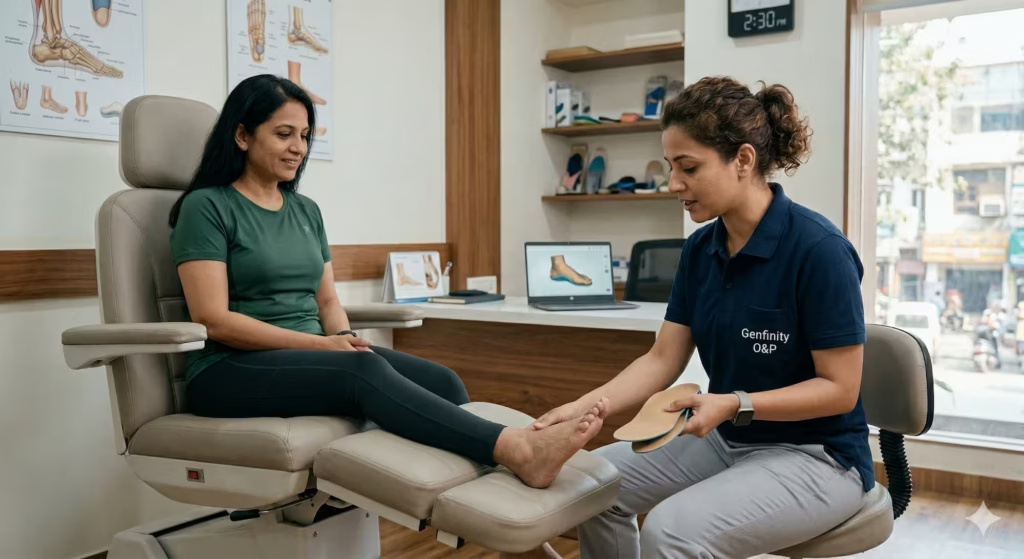
A custom orthotic fitting usually starts with a conversation about your symptoms, activity level, and footwear habits. Your provider will ask when the pain started and what makes it better or worse.
Next comes a physical exam. The specialist checks your arch height, range of motion, and the way your foot moves under load. Many clinics also use a gait analysis, which tracks how your foot strikes the ground while walking or running.
Once the exam is complete, your provider takes a mold or digital scan of your foot. This scan becomes the blueprint for your custom device, ensuring the final orthotic matches your foot rather than a generic shape.
From there, most custom orthotics take one to three weeks to manufacture. Your provider will schedule a follow up fitting to check comfort, make small adjustments, and confirm the device sits correctly inside your shoe.
Practical Tips for Recovery
Orthotics work best when paired with a few simple daily habits. Try these tips alongside your device for faster, more lasting relief.
- Stretch your calf muscles and plantar fascia each morning before standing.
- Ice your heel for 15 minutes after activity to reduce inflammation.
- Wear your orthotics consistently, not just during flare ups.
- Choose supportive shoes even around the house, and avoid walking barefoot on hard floors.
- Build up walking or running distance gradually instead of all at once.
- Maintain a healthy body weight to reduce pressure on your heels.
- Ask your provider about night splints if morning pain is severe.
A Quick Note From the Clinic Floor
In our experience fitting patients for orthotics, the biggest factor in recovery speed is consistency. Patients who wear their orthotics every day, even on pain free days, tend to see steadier improvement than those who only use them during flare ups.
How Heel Pain Affects the Rest of Your Body
Foot alignment does not stay isolated to the foot. When your heel and arch are not properly supported, the effects can travel up through your ankles, knees, and lower back.
Our article on orthotics for knee pain explains how correcting foot mechanics can reduce strain higher up the leg.
When to See a Specialist
Most mild heel pain improves within a few weeks of rest, stretching, and supportive footwear. If your pain continues past six to eight weeks, gets worse, or limits your daily activity, it is time to see a specialist.
A trained provider can assess your gait, check for structural issues, and recommend a custom orthotic built specifically for your foot. Early evaluation often leads to a faster and more complete recovery.
Conclusion
Heel pain does not have to control your life. Understanding what causes it, choosing the right orthotic support, and following a few consistent daily habits can make a real difference in how quickly you recover.
Whether your pain comes from plantar fasciitis, overpronation, or another cause, the right combination of support and care can get you back on your feet with confidence. Small, consistent steps such as daily stretching, supportive footwear, and properly fitted orthotics add up to real, lasting progress.
If you would like to explore your options further, visit our full guide to custom orthotics and prosthetics for a broader look at how supportive devices can help your feet.
If heel pain is slowing you down, the team at Genfinity O&P can help you find the right custom orthotic solution for your feet. Reach out today to schedule a fitting consultation and take the first step toward lasting relief.